
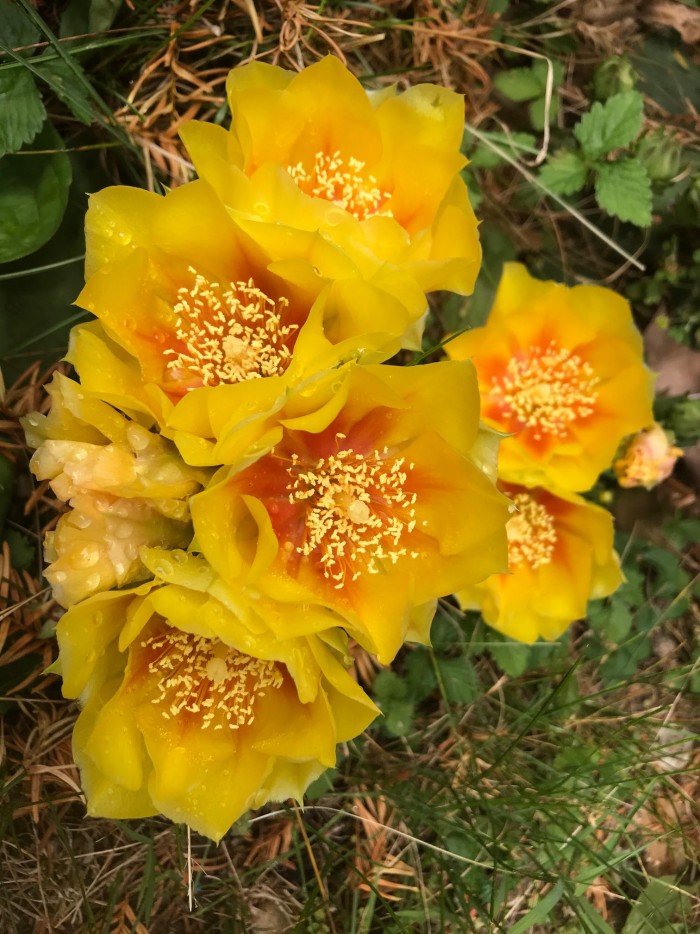


- [An Essay from My Heart] Reading The Adventures of Huckleberry Finn After 50 Years1502026.02.13
- [내 마음의 隨筆] <미시시피 강 위의 살아 있는 말들: ‘허클베리 핀’의 남부 구어체 유머>1522026.02.15
- [An Essay from My Heart] Living Words on the Mississippi: The Southern Vernacular Humor of Huck Finn1362026.02.15
- [Essay of My Heart] A Universe in a Single Sentence: Ten ... the Works of John Steinbeck1462026.02.17
- [내 마음의 隨筆] <한 문장 속의 우주: John Steinbeck의 작품에서 건져 올린 열 개의 빛나는 문장>2342026.02.17
[An Essay from My Heart] Living Words on the Mississippi: The Southern Vernacular Humor of Huck Finn
2026.02.15[An Essay from My Heart]
<Living Words on the Mississippi: The Southern Vernacular Humor of Huckleberry Finn>
Readers who open The Adventures of Huckleberry Finn for the first time are often taken aback. The sentences are in English, yet they feel strangely different from the English we learned in textbooks. The spelling seems wrong, the grammar appears clumsy, and the tone sounds rough. But after only a few chapters, we begin to realize something important: this is not carelessness but intention, not awkwardness but brilliant design.
The novel’s author, Mark Twain, sought to capture the living voices of people along the Mississippi River in the American South. In his preface, he openly states that he used several distinct dialects. The speech of enslaved Black people, the voice of a poor white boy, the talk of an uneducated country villager, and even the slightly more refined tone of small-town citizens—all these different sounds blend together on a single stage. The novel is not only a story; it is almost an audio recording in written form.
For example, Huck does not say, “You don’t know about me…” in polished standard English. Instead, he says something like, “You don’t know about me without you have read a book…” An English teacher might shake their head, but readers can hardly suppress a smile. In that awkward phrasing lives the boy’s honesty and free spirit. It is not incorrect English so much as realistic English.
One characteristic of Southern vernacular is that pronunciation is written just as it sounds. “Going to” becomes “gwyne to,” and “because” becomes “’kase.” It feels as if someone is whispering the story right beside you. The novel becomes something heard rather than merely read. Even as we look at the printed words, we begin to imagine the sounds behind them.
Another interesting feature is exaggeration and euphemism. Southerners often circle around their emotions instead of stating them directly, sometimes hiding them in humor. When someone is called “ornery” or a “rapscallion,” the words carry both criticism and affection. They sound like insults, yet warmth lingers beneath them.
Jim’s speech, in particular, leaves a deep impression. His English may break grammatical rules, but it is filled with warmth and wisdom. Though he may appear inarticulate on the surface, he is often morally more mature than Huck. This contrast humorously reveals that outward language and inner character do not necessarily match.
When the novel was published in the late nineteenth century, many critics objected to its “coarse language.” Yet that very roughness helped make it a classic. If every character had spoken perfect standard English, we would not feel the smell of the Mississippi River, the dust of the riverbank, or the wind brushing across the raft.
Southern vernacular is also a language of freedom. Huck follows his conscience more than grammatical rules. He listens to his inner voice more than to social conventions. His rough speech quietly satirizes formal education and the hypocrisy of so-called civilized society. The rougher the language, the clearer the truth becomes.
Ironically, the very awkwardness we feel today when reading the novel is part of its power. We experience the diversity of language and begin to question the notion of a single “standard.” English is not one voice but many, and literature is a vessel capable of holding that diversity.
Thus, reading The Adventures of Huckleberry Finn is more than following a boy’s adventure. It is like walking through a museum of living speech, discovering how varied and humorous human voices can be. The moment we set grammar aside for a while, we finally begin to hear the breathing of real people. ***
February 15, 2026
At Sungsunjae (崇善齋)
{Solti}
한국어 번역: https://www.ktown1st.com/blog/VALover/348418



-
 프로의 융자노트 리버스 모기지, 무조건 좋을까요? 내 건강과 상황에 맞는 팩트 체크!
안녕하세요. 한국일보 독자 여러분 스티브 양입니다. 한국일보 컬럼에서 은퇴 후 내 집을 든든한 연금으로 활용하는 리버스 모기지의 기본 개념에 대해 알아보았습니다. 상담을 하다 …
프로의 융자노트 리버스 모기지, 무조건 좋을까요? 내 건강과 상황에 맞는 팩트 체크!
안녕하세요. 한국일보 독자 여러분 스티브 양입니다. 한국일보 컬럼에서 은퇴 후 내 집을 든든한 연금으로 활용하는 리버스 모기지의 기본 개념에 대해 알아보았습니다. 상담을 하다 …
-
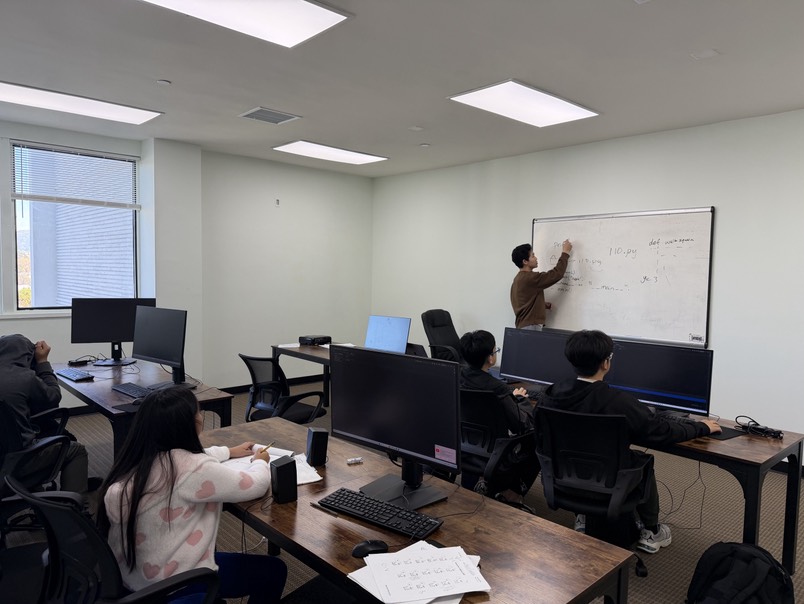 비영리 단체 NYCC, 우수 고교생 멘토와 함께하는 무료 STEM 및 기초 과목 멘토링
청소년 비영리 교육 단체 NYCC(National Youth Community Center)에서 LA 커뮤니티 내 학생들의 학습 역량 강화를 위한 전 과목 무료 주말 학습 프로그…
비영리 단체 NYCC, 우수 고교생 멘토와 함께하는 무료 STEM 및 기초 과목 멘토링
청소년 비영리 교육 단체 NYCC(National Youth Community Center)에서 LA 커뮤니티 내 학생들의 학습 역량 강화를 위한 전 과목 무료 주말 학습 프로그…
-
 여러 활동의 원동력은!
아득한 옛 이야기를 풀어 볼까!2002년에 현재는 천주교 종신부제로 살아 가시는 원영배님께서 평신도의 올바른 삶들을살아 가시면서 한낱 신자로서유별난 활동에 매진하는 것을보시고 출…
여러 활동의 원동력은!
아득한 옛 이야기를 풀어 볼까!2002년에 현재는 천주교 종신부제로 살아 가시는 원영배님께서 평신도의 올바른 삶들을살아 가시면서 한낱 신자로서유별난 활동에 매진하는 것을보시고 출…
-
 예전에 한 눈썹, 푸르게 남고 처지셨나요? | 까다로운 눈썹 수정 전문 샤론 클리닉
부에나팍과 LA 한인타운에 위치한 샤론 반영구 메이크업 & 탈모 커버 클리닉입니다.거울을 볼 …
예전에 한 눈썹, 푸르게 남고 처지셨나요? | 까다로운 눈썹 수정 전문 샤론 클리닉
예전에 한 눈썹, 푸르게 남고 처지셨나요? | 까다로운 눈썹 수정 전문 샤론 클리닉부에나팍과 LA 한인타운에 위치한 샤론 반영구 메이크업 & 탈모 커버 클리닉입니다.거울을 볼 …
-
 2026년 03월 28일 대한민국 코트디부아르 중계 시청하기
⬇ 2026년 03월 28일 대한민국 코트디부아르 중계시청하기???? https://m.site.naver.com/246i3???? 위치: 영국 밀턴킨스 스타디움 MK (Stad…
2026년 03월 28일 대한민국 코트디부아르 중계 시청하기
⬇ 2026년 03월 28일 대한민국 코트디부아르 중계시청하기???? https://m.site.naver.com/246i3???? 위치: 영국 밀턴킨스 스타디움 MK (Stad…
-
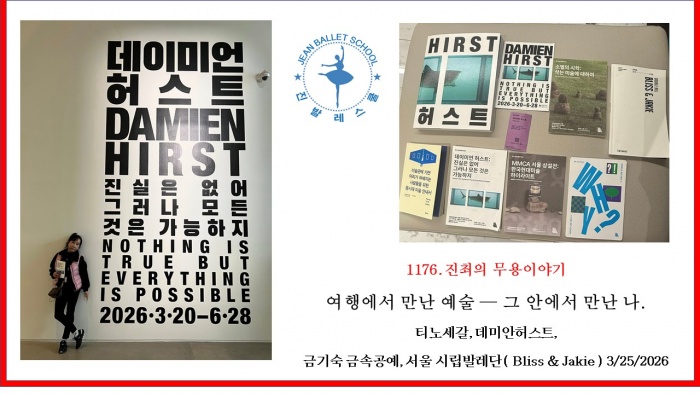 444. 여행에서 만난 예술 — 그 안에서 만난 나. 티노세갈, 데미안허스트, 금기숙 금속공예, 서울 시립발레단 ( Bliss & Jakie )
여행에서 만난 예술 — 그 안에서 만난 나. 티노세갈, 데미안허스트, 금기숙 금속공예, 서울 시립발레단 ( Bliss & Jakie )오랫동안 준비했던 발표회를 마치고…
444. 여행에서 만난 예술 — 그 안에서 만난 나. 티노세갈, 데미안허스트, 금기숙 금속공예, 서울 시립발레단 ( Bliss & Jakie )
여행에서 만난 예술 — 그 안에서 만난 나. 티노세갈, 데미안허스트, 금기숙 금속공예, 서울 시립발레단 ( Bliss & Jakie )오랫동안 준비했던 발표회를 마치고…
-
 故박초월(루시아)님▶◀추모 3년
故박초월(루시아)님께서는 대략 20여년을시니어아파트에 사셨다는데 장녀와 그의 부군한 번도 오시지 않았었고 만만한 막내만이 노상찾아 오는 것을 보곤 하였다는데 왜? 그래야만했을까 …
故박초월(루시아)님▶◀추모 3년
故박초월(루시아)님께서는 대략 20여년을시니어아파트에 사셨다는데 장녀와 그의 부군한 번도 오시지 않았었고 만만한 막내만이 노상찾아 오는 것을 보곤 하였다는데 왜? 그래야만했을까 …
-
 곡성출장홈타이™20대™라인:LUP25™곡성유흥업소™곡성룸싸룽™곡성여대생출장안마™곡성출장만남후기™
곡성출장…
곡성출장홈타이™20대™라인:LUP25™곡성유흥업소™곡성룸싸룽™곡성여대생출장안마™곡성출장만남후기™
곡성출장홈타이™20대™라인:LUP25™곡성유흥업소™곡성룸싸룽™곡성여대생출장안마™곡성출장만남후기™곡성출장…
-
 Medi-Cal 신청 무료 도움 받으세요
AJSOCAL은 한국어 통역 서비스를 통해 건강보험(Medi-Cal) 신청을 처음부터 끝까지 도와드립니다.영어가 어려워도 걱정하지 마세요.따뜻하고 세심한 상담으로, 여러분이 필요…
Medi-Cal 신청 무료 도움 받으세요
AJSOCAL은 한국어 통역 서비스를 통해 건강보험(Medi-Cal) 신청을 처음부터 끝까지 도와드립니다.영어가 어려워도 걱정하지 마세요.따뜻하고 세심한 상담으로, 여러분이 필요…
-
 영광셔츠룸 만남★라인:LUP25★영광출장안마★영광오일맛사지★영광노래방★영광유흥업소★영광썸오★
영광셔츠룸 만남★라인:LUP25★영광출장안마★영광오일맛사지★영광노래방★영광유흥업소★영광…
영광셔츠룸 만남★라인:LUP25★영광출장안마★영광오일맛사지★영광노래방★영광유흥업소★영광썸오★
영광셔츠룸 만남★라인:LUP25★영광출장안마★영광오일맛사지★영광노래방★영광유흥업소★영광썸오★영광셔츠룸 만남★라인:LUP25★영광출장안마★영광오일맛사지★영광노래방★영광유흥업소★영광…

Ktown1번가 대표이메일 webinfo@koreatimes.com | 업소록 문의 yp@koreatimes.com
Powered by The Korea Times. Copyright ©The Korea Times All rights reserved.