
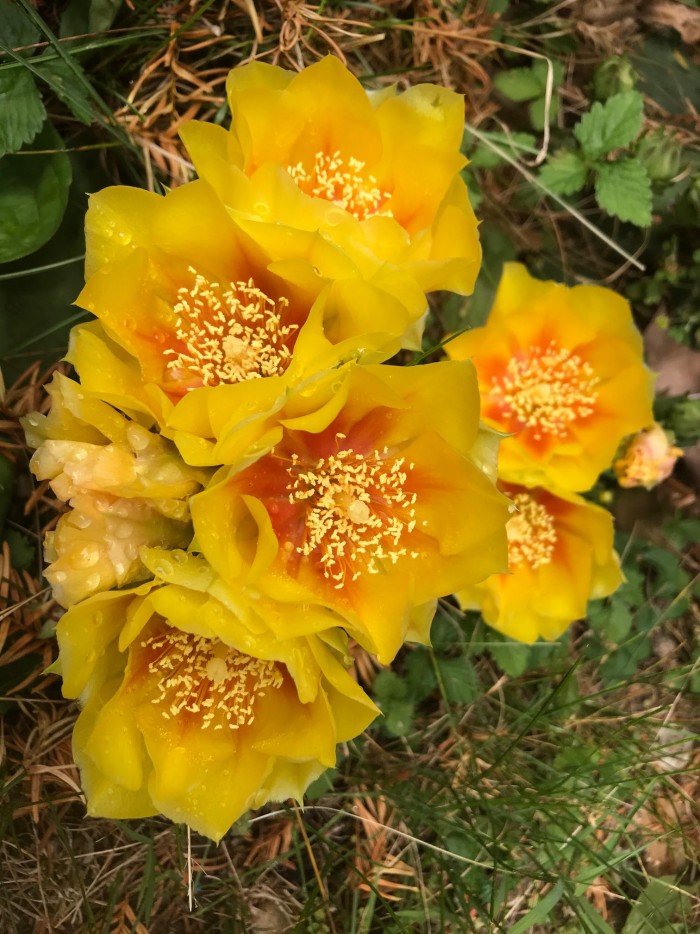


- [내 마음의 隨筆] 통찰력은 어디에서 오는가? - 1 of 21742025.12.30
- [내 마음의 隨筆] 통찰력은 어디에서 오는가? - 2 of 21472025.12.30
- [An Essay from My Heart] Where Does Insight Come From?1472025.12.30
- [An Essay from My Heart] Welcoming the New Year through Jeonggwan (Quiet Contemplation)1542026.01.01
- [내 마음의 隨筆] 정관(靜觀)으로 맞이하는 새해1832026.01.01
[An Essay from My Heart] Where Does Insight Come From?
2025.12.30[An Essay from My Heart]
Where Does Insight Come From?
Insight may strike like a sudden flash of lightning, yet it is rarely spontaneous. More often, it is the quiet accumulation of reflection over time. As Socrates said, “An unexamined life is not worth living,” and indeed, insight is the fruit of reflection and the discipline of habit. Einstein once observed, “Intuition is a sacred gift, and reason is its faithful servant.” True insight is the careful cultivation of that intuition.
The ten methods below are time-tested practices for nurturing insight, drawn from thinkers, scientists, and artists across East and West over centuries, and identified with the aid of artificial intelligence.
1. Cultivate the Habit of Asking “Why?”
All insight begins with questions. Newton’s law of universal gravitation and Darwin’s theory of evolution were born from the simple question: “Why is this so?”
Practical Tips:
- Each day, take an ordinary phenomenon and ask “Why?” five times.
- Read a line of news and separate the causes, context, and structure.
- Resist immediately searching for answers; allow yourself at least ten minutes of independent thought.
2. Decompose Phenomena into Their Underlying Structures
Peter Drucker defined insight as “the ability to see the structure beyond what is visible.” Insight emerges when we perceive patterns rather than isolated events.
Practical Tips:
- Break any problem into “cause–process–effect” and record it.
- Separate people, institutions, technology, and culture as distinct factors.
- Visualize complex phenomena through diagrams or flowcharts.
3. Deliberately Explore Unfamiliar Fields
Leonardo da Vinci was a painter, anatomist, and engineer. Insight is born at the boundaries between disciplines.
Practical Tips:
- Read at least one book per month outside your main field.
- Scientists read poetry; literary scholars read technical reports.
- Intentionally connect concepts from different domains.
4. Record Your Thoughts
Pascal said, “Thoughts vanish if they are not written down.” Insight resides not in memory, but in record.
Practical Tips:
- Write at least one sentence each day capturing “today’s thought.”
- Copy meaningful sentences and note why they resonate.
- Maintain separate notebooks for reflections and information.
5. Revisit the Classics
Times change, yet human nature remains largely the same. Thinkers such as Confucius, Plato, Aristotle, and Jeong Yak-yong still illuminate the present.
Practical Tips:
- Read a classic multiple times, asking a different question with each reading.
- Apply classical ideas to contemporary problems.
- Imagine how these thinkers would view today’s world.
6. Intentionally Create Time Alone
Nietzsche claimed that the deepest thoughts arise “while walking.” Insight grows not in noise, but in silence.
Practical Tips:
- Take a 20–30 minute walk without purpose.
- Set aside phone-free periods.
- Spend quiet time alone, thinking with a cup of coffee.
7. Rewrite from Different Perspectives
Insight often arises from shifting perspectives. Adam Smith urged us to see ourselves through the eyes of others.
Practical Tips:
- Write from the opposite point of view.
- Interpret others’ thoughts in the most generous way possible.
- Re-explain the same event from three different professional perspectives.
8. Learn to Interpret Failures and Mistakes
Edison described failure as “finding a way that doesn’t work.” Insight emerges when experience is transformed into understanding.
Practical Tips:
- Treat failures as information, not emotion.
- Ask, “What structure or lesson does this experience reveal?”
- After a mistake, write at least one line summarizing what you’ve learned.
9. Hone Your Sensitivity to Language
The depth of thought depends on the precision of language. Wittgenstein wrote, “The limits of my language mean the limits of my world.”
Practical Tips:
- Replace vague words with precise expressions.
- Rewrite a sentence in multiple ways to refine its meaning.
- Condense core concepts into a single, clear sentence.
10. Turn Insight into Action
Insight is only complete when it informs action. Confucius called this principle 知行合一—the unity of knowledge and action.
Practical Tips:
- Immediately apply realizations in small, concrete steps.
- Record the sequence: thought → action → outcome.
- Reflect on how insight changes your life over time.
Insight is not an innate gift, but a muscle of thought. Just as physical muscles grow stronger with repeated exercise, insight is cultivated through questioning, recording, connecting, and moments of silent reflection. Practice even one of these habits today, and your thinking will already be different tomorrow.
“Those who think deeply see far.”
Insight is not the power to predict the future, but the ability to understand the present profoundly.
December 30, 2025
{Solti}
한글 번역:
https://www.ktown1st.com/blog/VALover/348121
https://www.ktown1st.com/blog/VALover/348122



-
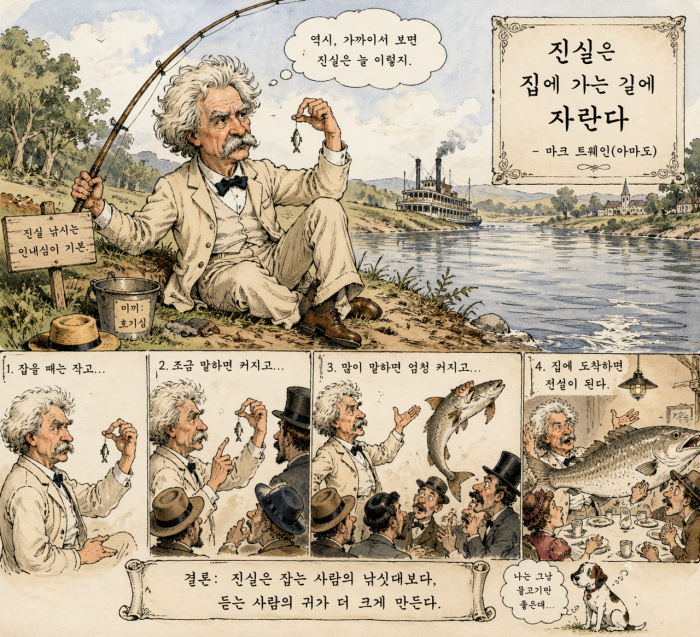 [내 마음의 短篇小說] 진실은 집에 가는 길에 자란다
어느 날 나는 진실을 낚으러 강가에 갔다.사람들이 말하길, 그것은 잘 잡히지 않지만 한 번 잡히면 매우 곤란한 존재라고 했다.나는 반쯤 믿고, 반쯤은 의심한 채 낚싯대를 드리웠다…
[내 마음의 短篇小說] 진실은 집에 가는 길에 자란다
어느 날 나는 진실을 낚으러 강가에 갔다.사람들이 말하길, 그것은 잘 잡히지 않지만 한 번 잡히면 매우 곤란한 존재라고 했다.나는 반쯤 믿고, 반쯤은 의심한 채 낚싯대를 드리웠다…
-
 H1B 취업비자, 제대로 알아야 미국 취업이 열린다
H1B 전문직 취업비자 FAQ (자주 묻는 질문)미국 내에서 커리어를 쌓고자 하는 전문가들에게 H1B 비자는 가장 대중적이면서도 강력한 무기입니다. 하지만 매년 치열해지는 추첨 …
H1B 취업비자, 제대로 알아야 미국 취업이 열린다
H1B 전문직 취업비자 FAQ (자주 묻는 질문)미국 내에서 커리어를 쌓고자 하는 전문가들에게 H1B 비자는 가장 대중적이면서도 강력한 무기입니다. 하지만 매년 치열해지는 추첨 …
-
 은평구출장홈타이™20대™라인:LUP25™은평구유흥업소™은평구룸싸룽™은평구여대생출장안마™은평구출장만남후기™
은평구출장홈타이™20대™라인:LUP25™은평구유흥업소™은평구룸싸룽™은평구여대생출장안마™은평구출장만남후기&trade…
은평구출장홈타이™20대™라인:LUP25™은평구유흥업소™은평구룸싸룽™은평구여대생출장안마™은평구출장만남후기™
은평구출장홈타이™20대™라인:LUP25™은평구유흥업소™은평구룸싸룽™은평구여대생출장안마™은평구출장만남후기&trade…
-
 오바마, 캐나다에 정치적 망명 신청
에 의해 마이클 백스터-2026년 5월 15일97146393지난주 캐나다에 머물던 버락 후세인 오바마 전 대통령(일명 배리 소에테로)은 트럼프 …
오바마, 캐나다에 정치적 망명 신청
오바마, 캐나다에 정치적 망명 신청에 의해 마이클 백스터-2026년 5월 15일97146393지난주 캐나다에 머물던 버락 후세인 오바마 전 대통령(일명 배리 소에테로)은 트럼프 …
-
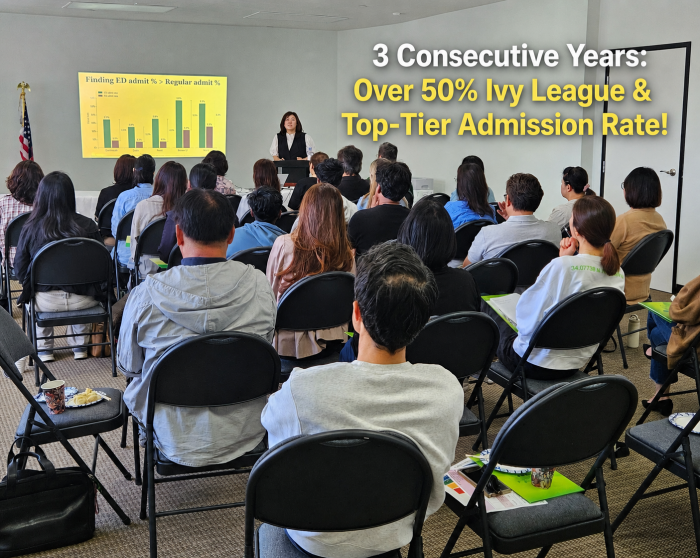 보스턴 에듀케이션 3년 연속 아이비반 절반 이상 명문대 진학! 합격을 가른 결정적 차이
최근 LA 한인 교육계에서 보스턴 에듀케이션의 압도적인 명문대 입시 성과가 큰 화제가 되고 있습니다. 수많은 학부모님들께서 가장 놀라워하시는 부분은 단연 합격률입니다.역대급으로 …
보스턴 에듀케이션 3년 연속 아이비반 절반 이상 명문대 진학! 합격을 가른 결정적 차이
최근 LA 한인 교육계에서 보스턴 에듀케이션의 압도적인 명문대 입시 성과가 큰 화제가 되고 있습니다. 수많은 학부모님들께서 가장 놀라워하시는 부분은 단연 합격률입니다.역대급으로 …
-
 이 땅에서 죽을병 안 걸리고 사고사 안 당하고 장수하는 방법 소개.
---건강하게 이 땅에서 오래 살려면 부모를 공경하고 예수 하나님 말씀을 사랑하며 경외하며 실천 하시면 장수하게…
이 땅에서 죽을병 안 걸리고 사고사 안 당하고 장수하는 방법 소개.
이 땅에서 죽을병 안 걸리고 사고사 안 당하고 장수하는 방법 소개.---건강하게 이 땅에서 오래 살려면 부모를 공경하고 예수 하나님 말씀을 사랑하며 경외하며 실천 하시면 장수하게…
-
 영광셔츠룸 만남★라인:LUP25★영광출장안마★영광오일맛사지★영광노래방★영광유흥업소★영광썸오★
영광셔츠룸 만남★라인:LUP25★영광출장안마★영광오일맛사지★영광노래방★영광유흥업소★영광…
영광셔츠룸 만남★라인:LUP25★영광출장안마★영광오일맛사지★영광노래방★영광유흥업소★영광썸오★
영광셔츠룸 만남★라인:LUP25★영광출장안마★영광오일맛사지★영광노래방★영광유흥업소★영광썸오★영광셔츠룸 만남★라인:LUP25★영광출장안마★영광오일맛사지★영광노래방★영광유흥업소★영광…
-
 4월15일 세금보고 D-7, IRA 막차 놓치셨나요? 지금부터 절세를 준비하면 됩니다.
안녕하세요. 한솔보험입니다.4월 15일 세금 보고 마감일이 딱 일주일 앞으로 다가왔습니다. 요즘 세금을 토해내게 생겼다며 급하게 상담을 요청하시는 분들이 부쩍 늘었는데요. 오늘은…
4월15일 세금보고 D-7, IRA 막차 놓치셨나요? 지금부터 절세를 준비하면 됩니다.
안녕하세요. 한솔보험입니다.4월 15일 세금 보고 마감일이 딱 일주일 앞으로 다가왔습니다. 요즘 세금을 토해내게 생겼다며 급하게 상담을 요청하시는 분들이 부쩍 늘었는데요. 오늘은…
-
 하와이에서 주일예배 드리기
https://youtu.be/aX77nWP6uoE?si=HwQ433XZO9myT_Ot
하와이에서 주일예배 드리기
https://youtu.be/aX77nWP6uoE?si=HwQ433XZO9myT_Ot
-
 잘 가요~! 그 가족들!
이미 그 가족들은 대략 3주 전에 모두 제 2의 생업 장소로 이동하여 생활하고얼마 남지 않은 잔여 시간을 위해 나온그 가족의 엄마는 잠간씩 일터에 나와있기는 하지만 입주자들의 모…
잘 가요~! 그 가족들!
이미 그 가족들은 대략 3주 전에 모두 제 2의 생업 장소로 이동하여 생활하고얼마 남지 않은 잔여 시간을 위해 나온그 가족의 엄마는 잠간씩 일터에 나와있기는 하지만 입주자들의 모…

Ktown1번가 대표이메일 webinfo@koreatimes.com | 업소록 문의 yp@koreatimes.com
Powered by The Korea Times. Copyright ©The Korea Times All rights reserved.