



- [내 마음의 隨筆] 崔岦의 一體八役과 人工知能 - 2 of 3 1432026.01.11
- [내 마음의 隨筆] 崔岦의 一體八役과 人工知能 - 3 of 3 1322026.01.11
- [An Essay from My Heart] Choi Rip’s “One Body, Eight Roles” and Artificial Intelligence1462026.01.11
- [내 마음의 隨筆] 반지는 약속이 아니고, 신의는 습관이다 - 2 of 21512026.01.12
- [내 마음의 隨筆] 반지는 약속이 아니고, 신의는 습관이다 - 1 of 22292026.01.12
[An Essay from My Heart] Choi Rip’s “One Body, Eight Roles” and Artificial Intelligence
2026.01.11A New Model of Human Leadership for the Age of AI
Artificial intelligence is advancing at a breathtaking pace. Algorithms diagnose diseases, draft legal documents, predict markets, and generate texts increasingly indistinguishable from human writing. Yet amid this technological leap, a fundamental question remains unresolved.
Who is the subject of these choices? Who assigns meaning, and who bears responsibility for the outcomes? AI can optimize decisions, but it cannot justify them. It can recommend actions, but it cannot take responsibility. It can generate sentences, but it cannot explain why a particular choice is right.
Leadership does not disappear in the age of AI. Rather, it returns in a sharper form, asking a more pointed question: “To whose body does responsibility ultimately belong?”
The Hidden Vacuum of Responsibility Beneath the AI Boom
Contemporary discussions of AI leadership tend to focus on technical competence: data literacy, algorithmic governance, regulatory compliance. All are necessary, but none are sufficient. The real crisis lies not in technology itself, but in the disintegration of responsibility structures.
When AI systems deny loans, misidentify suspects, or automate mass layoffs, the central question is not model accuracy. It is who decided to deploy AI in this way, and to whom that decision is ultimately attributed.
Technology amplifies power far more quickly than wisdom. History repeatedly shows that when power advances ahead of responsibility, societies inevitably fracture. At this moment, we must ask not for another list of capabilities, but for a renewed understanding of the architecture of responsibility.
Choi Rip and the Human Leadership of One Body, Eight Roles
Choi Rip (1539–1612), known by his pen name Gani (簡易), was a scholar, diplomat, administrator, poet, and educator of mid-Joseon Korea. He lived through war, political collapse, and institutional disorder. Though he fulfilled many roles, he was never many people.
He was not a technologist, yet he embodied the essence of leadership urgently required today: integrated human leadership.
Choi Rip lived as one body (一體) performing eight roles (八役)—as a thinker; a literary figure (classical poet and prose writer); a diplomat; a statesman; an administrator; an educator; an artist; and a cultivated man of refined leisure. He was, in this sense, a Renaissance figure of Joseon.
His life reveals eight dimensions of leadership that AI can never replace.
First, Ethical Direction
Choi Rip believed that knowledge without purpose was dangerous. In today’s terms, leaders must define why technology should be used before asking whether it can be used.
Second, the Creation of Meaning
AI can generate text, but it cannot generate meaning. Organizations do not follow dashboards; people follow narratives that explain why decisions are made and what their consequences will be.
Third, Clarity
Choi Rip’s prose was valued for its restraint and precision. Today’s leaders must translate opaque AI outputs into language that people can understand and question.
Fourth, Diplomacy and Mediation
AI is reshaping relationships among governments, corporations, and citizens. Managing these tensions requires trust, negotiation, and cultural understanding—tasks that belong to humans, not algorithms.
Fifth, Responsible Execution
AI recommends; humans decide. Leadership means refusing to evade responsibility even when outcomes are uncertain or unpopular.
Sixth, the Cultivation of Human Capacity
For Choi Rip, education was not credentialing but moral and intellectual formation. Leaders in the AI era must constantly examine whether technology strengthens or weakens human judgment.
Seventh, Balance and Restraint
Efficiency without reflection exhausts institutions and provokes resistance. Knowing when not to automate is itself an act of leadership.
Finally, Memory and Stewardship
Choi Rip deliberately preserved his writings for future generations. Today’s leaders must likewise preserve the context of decisions, ethical debates, and records of failure. Automation tends to erase memory.
This point is crucial. AI can distribute functions, but it cannot distribute responsibility. It is precisely in this sense that Choi Rip’s leadership must be reread for our time.
One Body: The Single Locus of Responsibility
“One Body” does not refer to the sum of abilities. It refers to the single human agent to whom final judgment and moral responsibility are assigned.
The most dangerous illusion of the AI age is the belief that responsibility can be dispersed among systems, procedures, or algorithms. Responsibility cannot be automated. It can only be carried by one body—or abandoned altogether.
Eight Roles: The Human Functions of Leadership
That single body performs eight roles, depending on circumstance.
As an ethical architect, the leader asks not whether technology is possible, but why it should be used.
As an interpreter of meaning, the leader weaves AI-generated outputs into narratives of decision and consequence.
As a translator, the leader renders opaque algorithmic results into language humans can understand and challenge.
As a mediator, the leader manages AI-driven tensions among governments, corporations, and civil society.
As a decision-maker, the leader chooses beyond recommendation and stands firm before uncertainty.
As a cultivator, the leader ensures that technology nurtures rather than replaces human judgment.
As a restrainer, the leader has the courage to know when automation should not proceed.
And as a keeper of memory, the leader preserves the context of decisions so responsibility does not vanish.
These roles may be divided in practice, but responsibility itself cannot be separated.
Why This Redefinition Is Necessary Now
AI governance often assumes that better rules and more sophisticated models will resolve ethical risk. They will not. Rules cannot anticipate every situation, and models cannot interpret values. The gap can only be filled by human leaders who stand as One Body.
This is not an argument against AI. It is a call to return leadership to its human place.
The leader of the AI era is not the fastest adopter or the most technically skilled engineer. It is the person who can integrate technology with judgment, regulate speed with restraint, and explain innovation in the language of responsibility.
Toward a Human-Centered Future
The future will not be determined by algorithms alone. It will depend on what kind of human responsibility surrounds them.
Choi Rip’s life teaches us that leadership is not a collection of functions, but a single responsible agent willing to bear multiple roles. As machines become faster at calculation, the human task of deciding what truly matters becomes ever more urgent.
AI is powerful.
But meaning, responsibility, and moral direction remain—irreducibly and essentially—with the human leader as One Body.
That is why, in this age, what we need is not more algorithms, but the leadership of One Body, Eight Roles.
January 11, 2026
At Sungsunjae (崇善齋)
{Solti}
한국어 번역: https://www.ktown1st.com/blog/VALover/348200


-
 도봉구셔츠룸 만남★라인:LUP25★도봉구출장안마★도봉구오일맛사지★도봉구노래방★도봉구유흥업소★도봉구썸오★
도봉구셔츠룸 만남★라인:LUP25★도봉구출장안마★도봉구오일맛사지★도봉구노래방…
도봉구셔츠룸 만남★라인:LUP25★도봉구출장안마★도봉구오일맛사지★도봉구노래방★도봉구유흥업소★도봉구썸오★
도봉구셔츠룸 만남★라인:LUP25★도봉구출장안마★도봉구오일맛사지★도봉구노래방★도봉구유흥업소★도봉구썸오★도봉구셔츠룸 만남★라인:LUP25★도봉구출장안마★도봉구오일맛사지★도봉구노래방…
-
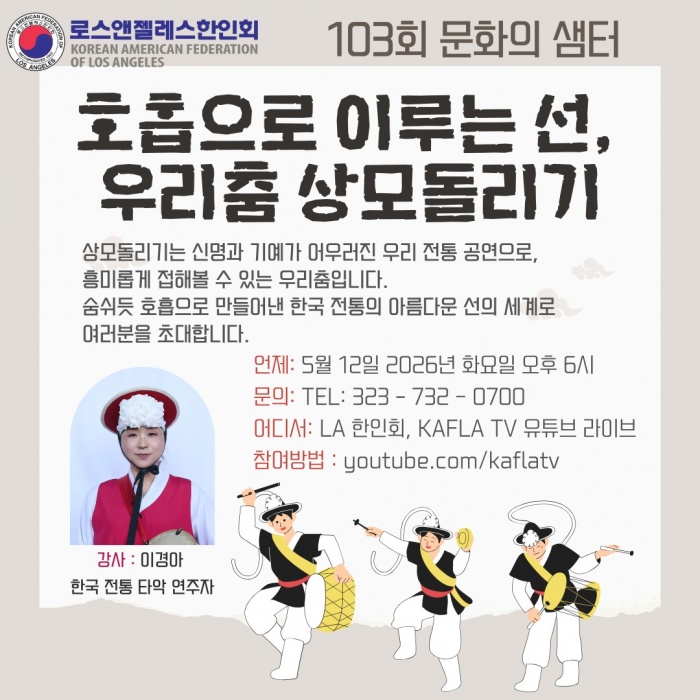 455. 103.LA 한인회 문화의 샘터 호흡으로 이루는 선, 우리춤 상모돌리기
103. LA 한인회 문화의 샘터 호흡으로 이루는 선, 우리춤 상모돌리기 강사 : 이경아 한국 전통타악 연주자 상모돌리기는 신명과 기예가 어우러진 우리 전통 공연으로, 흥미롭게 …
455. 103.LA 한인회 문화의 샘터 호흡으로 이루는 선, 우리춤 상모돌리기
103. LA 한인회 문화의 샘터 호흡으로 이루는 선, 우리춤 상모돌리기 강사 : 이경아 한국 전통타악 연주자 상모돌리기는 신명과 기예가 어우러진 우리 전통 공연으로, 흥미롭게 …
-
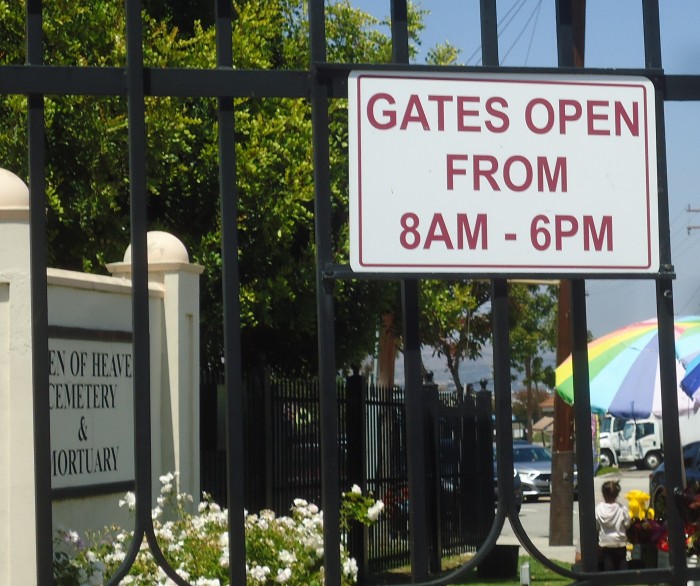 이제는 찾아 가기가 쉽지 않겠네.
점점 거리가 멀고도 먼 곳이라 여기니쉽게 찾아 가기가 용이하지도 않구나.요즘처럼 개스 가격이 하늘 높은 줄도 모르고 치솟는 관계로 더욱 더 힘들어!왕복 거리도 만만치 않은 관계로…
이제는 찾아 가기가 쉽지 않겠네.
점점 거리가 멀고도 먼 곳이라 여기니쉽게 찾아 가기가 용이하지도 않구나.요즘처럼 개스 가격이 하늘 높은 줄도 모르고 치솟는 관계로 더욱 더 힘들어!왕복 거리도 만만치 않은 관계로…
-
 이민 신청서, 서명 하나 잘못하면 바로 기각
도널드 트럼프 행정부가 이민 신청 절차에서 서명 규정을 대폭 강화하는 새 지침을 발표했다. 이에 따라 단순한 서명 형식 오류만으로도 접수된 신청이 뒤늦게 기각될 수 있어 각별한 …
이민 신청서, 서명 하나 잘못하면 바로 기각
도널드 트럼프 행정부가 이민 신청 절차에서 서명 규정을 대폭 강화하는 새 지침을 발표했다. 이에 따라 단순한 서명 형식 오류만으로도 접수된 신청이 뒤늦게 기각될 수 있어 각별한 …
-
 오바마, 캐나다에 정치적 망명 신청
에 의해 마이클 백스터-2026년 5월 15일97146393지난주 캐나다에 머물던 버락 후세인 오바마 전 대통령(일명 배리 소에테로)은 트럼프 …
오바마, 캐나다에 정치적 망명 신청
오바마, 캐나다에 정치적 망명 신청에 의해 마이클 백스터-2026년 5월 15일97146393지난주 캐나다에 머물던 버락 후세인 오바마 전 대통령(일명 배리 소에테로)은 트럼프 …
-
 영광셔츠룸 만남★라인:LUP25★영광출장안마★영광오일맛사지★영광노래방★영광유흥업소★영광썸오★
영광셔츠룸 만남★라인:LUP25★영광출장안마★영광오일맛사지★영광노래방★영광유흥업소★영광…
영광셔츠룸 만남★라인:LUP25★영광출장안마★영광오일맛사지★영광노래방★영광유흥업소★영광썸오★
영광셔츠룸 만남★라인:LUP25★영광출장안마★영광오일맛사지★영광노래방★영광유흥업소★영광썸오★영광셔츠룸 만남★라인:LUP25★영광출장안마★영광오일맛사지★영광노래방★영광유흥업소★영광…
-
 [내 마음의 短篇小說] 길 끝의 먼지
해 질 무렵, 들판은 오래된 금빛처럼 잠들어 있었다. 바람은 낮 동안 쌓아 올린 먼지를 천천히 눕히며, 길 끝의 작은 마을로 흘러갔다.조는 트럭 옆에 서서 손바닥으로 엔진을 닦고…
[내 마음의 短篇小說] 길 끝의 먼지
해 질 무렵, 들판은 오래된 금빛처럼 잠들어 있었다. 바람은 낮 동안 쌓아 올린 먼지를 천천히 눕히며, 길 끝의 작은 마을로 흘러갔다.조는 트럭 옆에 서서 손바닥으로 엔진을 닦고…
-
 곡성≤전국구 출장안마≥라인:LUP25√곡성출장콜걸√곡성출장마사지√곡성모텔출장알바√곡성24시예약상담√
 곡성≤전…
곡성≤전국구 출장안마≥라인:LUP25√곡성출장콜걸√곡성출장마사지√곡성모텔출장알바√곡성24시예약상담√
곡성≤전국구 출장안마≥라인:LUP25√곡성출장콜걸√곡성출장마사지√곡성모텔출장알바√곡성24시예약상담√ 곡성≤전…
-
 비(非)양심적인 모습들?
주거 공간은 한정되어 있고 또한 주차 공간도마찬가지로 부족한 상태의 아파트라고 한다만,제대로 법규를 지켜 나가야 하는데도 무시하고우리만을 외치면서 불법적으로 비(非)양심적인모습으…
비(非)양심적인 모습들?
주거 공간은 한정되어 있고 또한 주차 공간도마찬가지로 부족한 상태의 아파트라고 한다만,제대로 법규를 지켜 나가야 하는데도 무시하고우리만을 외치면서 불법적으로 비(非)양심적인모습으…
-
 부동산에 1031 Exchange가 있다면 은퇴 계좌에는 이것이 있다
미주 사회에서 부동산 투자를 좀 해보신 분들이라면 누구나 1031 Exchange(에스크로 교환)를 잘 알고 계십니다. 당장 양도소득세를 내지 않고 더 큰 건물이나 좋은 조건의 …
부동산에 1031 Exchange가 있다면 은퇴 계좌에는 이것이 있다
미주 사회에서 부동산 투자를 좀 해보신 분들이라면 누구나 1031 Exchange(에스크로 교환)를 잘 알고 계십니다. 당장 양도소득세를 내지 않고 더 큰 건물이나 좋은 조건의 …

Ktown1번가 대표이메일 webinfo@koreatimes.com | 업소록 문의 yp@koreatimes.com
Powered by The Korea Times. Copyright ©The Korea Times All rights reserved.